New Clients Save 10% On Their First Service
Encourage Healthier Growth With Tree Trimming Service in Keller, TX
Tree trimming is about much more than creating a tidy appearance. Removing the right branches at the right time helps trees develop stronger structure, improves airflow through the canopy, and reduces the likelihood of storm related failures. We evaluate every tree individually so the work supports both its long-term health and the overall appearance of your landscape.
When Trees Outgrow Their Natural Balance
Trees naturally expand their canopies each year as they compete for sunlight and space. Without periodic pruning, that growth can create dense crowns, overextended limbs, and uneven weight distribution that places unnecessary stress on the tree. While these changes often happen gradually, they can eventually affect nearby roofs, driveways, fences, and utility lines, especially during North Texas storms.
Many homeowners assume every branch should remain unless it’s obviously dead. In reality, branches that cross one another, grow inward, or develop weak attachments can reduce the tree’s structural integrity over time. Left unaddressed, these conditions may increase the likelihood of broken limbs, create entry points for decay, or limit sunlight and air movement throughout the canopy.
Professional tree trimming isn’t about removing as much growth as possible. It’s about making purposeful cuts that improve the tree’s structure while preserving its natural form. By evaluating how each branch contributes to the canopy, it’s possible to reduce unnecessary weight, encourage balanced growth, and address developing concerns before they require more extensive work. Thoughtful pruning today often helps mature trees remain healthier, safer, and more attractive for years to come.
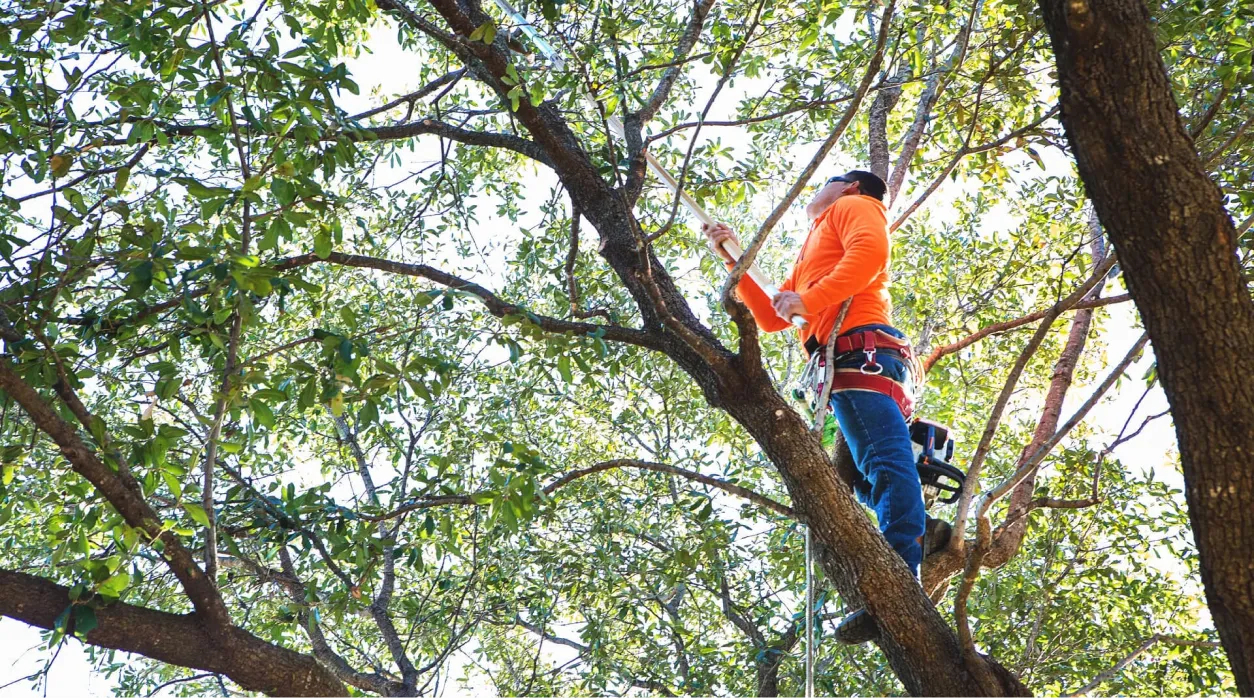
Thoughtful Pruning Supports The Way Trees Naturally Grow
Every pruning cut influences how a tree responds in the months and years that follow. That’s why successful tree trimming begins with understanding how the tree has developed rather than immediately removing branches. Our goal is to improve the tree’s structure while respecting its natural growth pattern.
We begin by identifying branches that no longer contribute positively to the canopy. Deadwood is removed because it no longer supports healthy growth and can become a hazard during high winds. Crossing branches are evaluated to prevent bark damage caused by repeated rubbing, while crowded areas of the canopy may be selectively opened to improve airflow and light penetration. These adjustments help reduce excess moisture within the canopy and create conditions that support healthier foliage.
Weight distribution is another important consideration. Long, heavily extended limbs create additional leverage where they connect to the trunk or larger scaffold branches. Strategic pruning reduces that stress while encouraging the tree to develop a more balanced canopy. Rather than changing the character of the tree, the objective is to help it continue growing in a way that supports strength, longevity, and visual appeal.
Frequently Asked Questions About Tree Trimming
-
Trees often show subtle signs before problems become obvious. Overgrown limbs, branches rubbing together, deadwood, low hanging limbs, or a dense canopy that blocks sunlight are all indicators that pruning may be beneficial. A professional evaluation helps determine what should be removed while preserving the tree’s natural structure.
-
The ideal timing depends on the tree species and its condition. Some trees respond well to dormant-season pruning, while others are better trimmed after active growth slows. Storm damage or hazardous limbs should be addressed promptly regardless of the season to reduce unnecessary risks.
-
When performed correctly, yes. Purposeful pruning removes dead, damaged, or poorly positioned branches that compete for resources or create structural weaknesses. It also improves airflow throughout the canopy and encourages balanced growth without removing more foliage than the tree can comfortably support.
-
Tree trimming cannot eliminate every storm risk, but it can reduce the likelihood of branch failures. Removing deadwood, reducing excess weight on long limbs, and improving canopy balance help trees respond more effectively to strong winds and heavy rainfall common in North Texas.
-
Most established trees benefit from periodic evaluations rather than following a fixed schedule. Growth rate, species, previous pruning, and surrounding conditions all influence maintenance needs. Regular inspections help identify developing concerns before they require more extensive corrective work.
Enjoy 10% Off Your First Tree Trimming Service
Healthy trees deserve thoughtful care before small concerns become larger problems. New clients receive 10% off their first service, making it the perfect time to improve the health, appearance, and structure of your landscape.