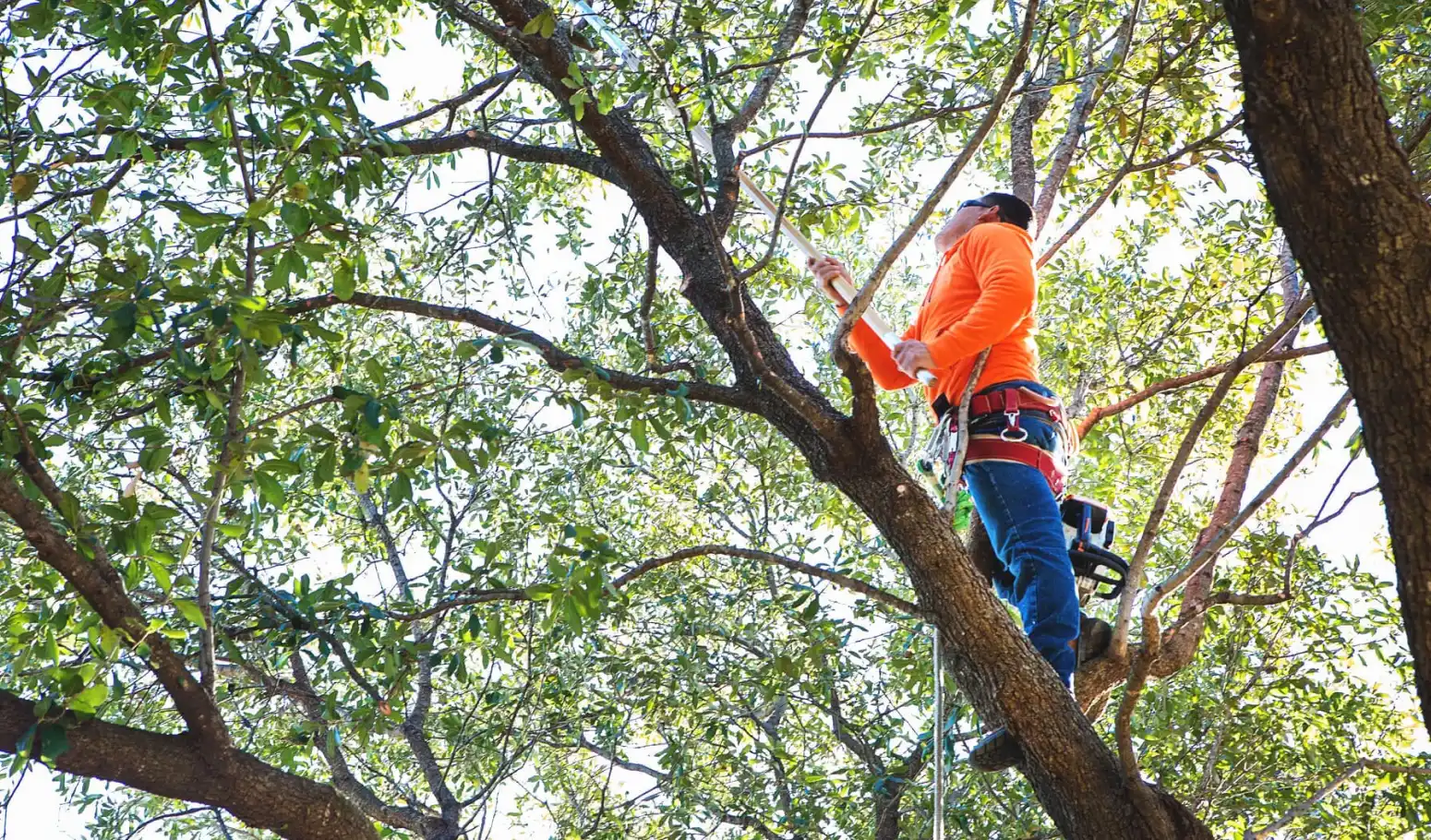
Why Falling Limbs Can Cost Thousands in Repairs
When a tree dies, its structural integrity begins to deteriorate immediately. The wood loses moisture, becomes brittle, and weakens throughout the trunk and limbs. What appears stable today can become a catastrophic failure tomorrow, sending massive branches or entire trunks crashing onto homes, vehicles, fences, or utility lines. A single falling limb can punch through a roof, shatter windows, or total a parked car, leaving property owners facing repair bills that climb into the thousands or tens of thousands of dollars.
In the Dallas and Fort Worth region, the combination of high winds during spring storm seasons and prolonged summer heat accelerates the breakdown of dead wood. Trees that survived winters intact often fail suddenly during summer thunderstorms when gusts exceed fifty miles per hour. The unpredictability makes timing critical. Regular assessment by a qualified tree service can identify which trees pose immediate risks and which require monitoring. Proactive tree removal eliminates the threat before weather events turn a manageable situation into an insurance claim. The investment in professional removal is a fraction of the cost of repairing structural damage to your home or replacing vehicles.
How One Diseased Tree Threatens Your Entire Landscape
A standing dead tree is not an isolated problem. It often serves as a reservoir for fungal pathogens, bacterial infections, and viral diseases that can spread to surrounding healthy trees through root grafts, insect vectors, or airborne spores. Oak wilt, hypoxylon canker, and other aggressive diseases thrive in dying and dead wood, using the compromised tree as a base to launch infections into your remaining landscape. Once established in your yard, these pathogens can sweep through multiple trees, turning a single loss into a cascade of decline that devastates your property’s canopy and curb appeal.
In North Texas, oak wilt has become a significant concern for property owners, particularly in areas with dense tree cover like Colleyville, Grapevine, and Southlake. The fungus spreads rapidly through interconnected root systems, and a single infected tree left standing can infect a dozen healthy oaks within a single growing season. Professional tree removal services understand the protocols required to prevent disease transmission during removal, including proper timing, sanitization of equipment, and disposal methods that stop pathogens in their tracks. Removing diseased trees promptly and correctly protects the health and longevity of your entire landscape investment.
The Hidden Cost of Wood-Boring Insects in Your Yard
Dead and dying trees attract wood-boring insects, termites, carpenter ants, and other pests that colonize decaying wood. These insects establish breeding populations in the dead tree, then radiate outward to nearby structures, fences, and healthy trees. Termites, in particular, will move from a dead tree into wooden siding, decks, and even the framing of your home if given enough time and proximity. What begins as a habitat for beetles and borers can quickly escalate into a full-scale pest infestation that requires costly extermination and ongoing monitoring.
In the warmer months across the Dallas and Fort Worth areas, insect activity peaks as temperatures climb and moisture patterns shift. Dead trees become hubs of activity, with visible exit holes, sawdust accumulations, and audible chewing sounds signaling active infestations. These pests do not respect property lines; they will migrate to any available wood source, including your home. Professional tree removal and stump grinding eliminate the habitat entirely, cutting off the food source and breeding ground that sustains these populations. Addressing the issue early prevents a localized problem from spreading into a property-wide crisis that affects not just trees, but the structural integrity of buildings and outdoor features.
Storm-Damaged Branches Become Projectiles
When a tree dies, its root system stops absorbing water and begins to decay. As roots decompose, they create voids in the soil that can shift and settle unpredictably. In clay-heavy soils common throughout North Texas, this decomposition can alter moisture distribution around foundations, causing soil expansion and contraction that leads to cracking, shifting, and structural instability. Large roots close to a home can create significant voids as they rot, undermining driveways, sidewalks, patios, and even foundation slabs. The damage unfolds slowly, often going unnoticed until cracks appear in walls or floors begin to slope.
The expansive clay soils in Colleyville, Keller, and surrounding areas are particularly susceptible to these shifts. A dead tree near a foundation is not just an eyesore; it is an active contributor to soil instability. As roots decay, the soil loses structure and support, and the next heavy rain or drought cycle can trigger settlement that stresses your home’s foundation. Professional tree removal, combined with stump grinding, removes both the visible tree and the subsurface root mass, allowing you to backfill voids and stabilize the area before foundation damage occurs. Waiting too long can turn a manageable tree removal project into a complex and expensive foundation repair. Taking action now protects one of your most valuable assets.
Storm season brings high winds, lightning strikes, and heavy rain, all of which pose heightened risks when a dead tree stands on your property. A tree weakened by decay is far more likely to fall during severe weather, and when it does, the consequences can be devastating. Beyond property damage, a falling tree can cause serious injury or death to family members, neighbors, or passersby. Liability for such incidents falls squarely on the property owner, potentially resulting in lawsuits, insurance claims, and long-term financial burdens that dwarf the cost of proactive removal.
Increased Risk During Severe Weather
When a dead tree threatens your property, waiting is not an option. The five hidden dangers outlined above, structural failure, pest infestations, disease spread, fire hazards, and falling liability, represent real risks that homeowners and property managers throughout Colleyville cannot afford to ignore.
A certified tree service brings the expertise, equipment, and safety protocols necessary to assess and address dead or dying trees before they cause harm. Professional arborists can evaluate the structural integrity of a tree, identify pest activity or disease, and determine the safest removal method for your specific property layout.
For properties in Dallas, Fort Worth, Grapevine, and surrounding communities, the combination of severe weather events, drought stress, and native pest populations makes regular tree health assessments particularly important. Dead trees that survive one storm season rarely make it through the next, and the longer they stand, the more unpredictable their failure becomes.
Professional tree removal service eliminates these risks entirely. Certified crews use rigging systems, cranes when necessary, and precision cutting techniques to dismantle dead trees in sections, preventing damage to structures, utilities, and landscaping. Following removal, stump grinding service completes the process by eliminating tripping hazards and reclaiming usable yard space.
Property owners should also consider that dead tree removal often qualifies for insurance claims when storm damage is involved, but only if the work is performed by licensed, insured contractors. Documentation from a professional tree contractor provides the evidence needed to support these claims.
Beyond immediate safety, removing dead trees protects your landscape investment. Healthy trees increase property values, provide shade that reduces cooling costs, and contribute to neighborhood aesthetics. Dead trees accomplish none of these goals, they only pose ongoing threats that grow worse with time.
If you have identified a dead or declining tree on your property, contact us for a professional assessment. Our team serves the greater Colleyville area with comprehensive tree care solutions, from emergency tree service for storm-damaged trees to planned removals that protect your family and property. Do not wait for a dead tree to choose when and where it falls, take action now to secure your property and peace of mind.